
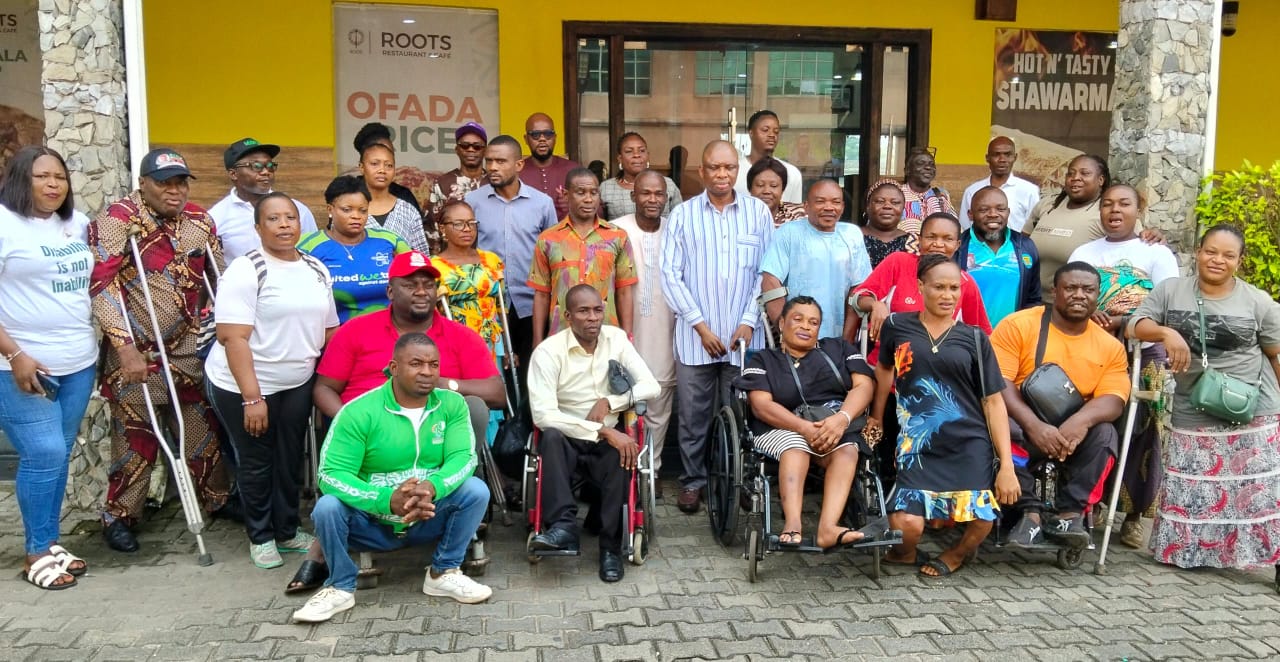

The Chairman of the Abia State Commission for the Welfare of Persons with Disabilities, Dr. David Anyaele, has declared that employing persons with disabilities in the civil service is not an act of charity, but a recognition of their qualifications, abilities, and capacity to contribute to society.
Dr. Anyaele made this statement during an interactive meeting with persons with disabilities (PWDs) working in the Abia State Civil Service in Umuahia. He explained that the engagement was designed to better understand their unique challenges, particularly regarding the extension of years of service, the restoration of disability allowances, and the provision of reasonable workplace accommodations.
“I am here to interact with you and to appreciate the issue around your request for the extension of years of service and restoration of disability allowance for Abians with disabilities in the Abia State Civil Service,”
“It is an opportunity to understand what has worked and the challenges being experienced by Abia Civil Servants with Disabilities. It is our intention to document key issues raised here for possible policy intervention.”
He emphasized that the Abia State Disability Law, the Discrimination Against Persons with Disabilities (Prohibition) Act, and the United Nations Convention on the Rights of Persons with Disabilities all mandate the protection, inclusion, and active participation of PWDs in social and economic activities without discrimination.
Highlighting the administration’s proactive stance, the Commission Chairman noted that the initiative is deeply rooted in the current government’s foundational policies.
“The advantage we have is that our Governor, His Excellency, Dr. Alex C. Otti, OFR, cares for the welfare of persons with disabilities. His intention is well documented in his 2023 campaign manifesto and the Transition Council policy recommendation,” Dr. Anyaele said.
He added that the Governor is committed to intentionally creating policies and programs that will “reverse a long history of uncharitable treatment of our retirees, PWDs, and the vulnerable,” ensuring their basic needs are met so they can live a life of dignity and continue contributing to society.
Earlier in his speech, the Secretary of the Association of Civil Servants with Disabilities, Mr. Sam Ekeoma, highlighted the severe institutional, environmental, and administrative barriers hindering their effectiveness. He pointed out that inaccessible roads and office environments not only increase transportation expenses for persons with disabilities but also lead to workplace discrimination, with some managers failing to assign responsibilities to them due to these physical barriers.
Mr. Ekeoma also raised concerns about the non-implementation of statutory salaries, allowances, and other benefits provided under existing disability laws. Clarifying that this issue stems from systemic non-implementation rather than deliberate denial, he appealed to the Commission to engage the Head of the Civil Service and the Local Government Service Commission to ensure these entitlements are fully enforced.