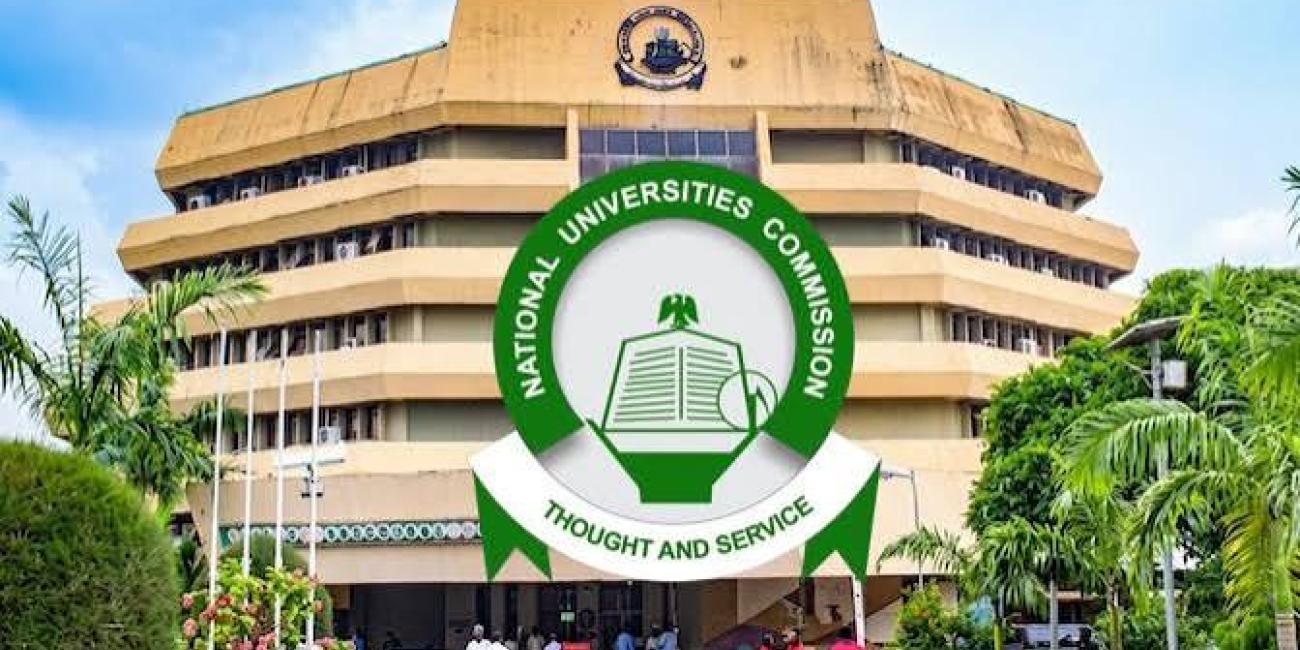

The University of America, Curaçao, has challenged the National Universities Commission’s declaration that its operations in Nigeria are illegal, insisting that the commission lacks the authority to invalidate its legal existence in another country.
The university, in a statement issued by its Media Consultant, Martins Chiedozie Ugwu, and made available to journalists in Kaduna on Friday, said it was established under the laws of Curaçao, a constituent country of the Kingdom of the Netherlands.
The response followed a public notice by the NUC warning Nigerians against enrolling at the institution and its affiliated centres in the country, which it described as illegal and unauthorised.
The commission identified the affected centres as Cosmopolitan International Business School, Garki, Abuja; its purported Federal Capital Territory Learning Centre; and the University of America College of Science and Technology, popularly known as UAPOLY, in Ekpoma, Edo State.
The NUC said investigations showed that the institution was not accredited by any agency recognised by the United States Department of Education or the Council for Higher Education Accreditation.
It also dismissed claims that its purported listing in the Integrated Postsecondary Education Data System, as well as registrations in California and Florida, conferred accreditation or the authority to award recognised university degrees.
However, the university maintained that it had never presented itself as a Nigerian university, arguing that its legal existence in Curaçao should be distinguished from the regulatory status of its educational activities and learning support centres in Nigeria.
“The legal status of our institution and the regulatory status of our Nigerian learning support centres are separate questions that must not be conflated,” it said.
The institution claimed to possess a government-issued operating licence, a ministerial charter authorising it to award academic degrees and institutional accreditation under the Curaçao framework, adding that the documents were available for independent verification.
It argued that although the NUC had statutory responsibility for regulating universities and degree-awarding activities in Nigeria, its powers did not automatically extend to revoking the charter of a foreign institution established under another sovereign jurisdiction.
“The NUC is a statutory regulatory institution whose authority must be exercised within the limits prescribed by Nigerian law.
“Its responsibility for regulating universities and degree-awarding operations in Nigeria does not automatically translate into authority to revoke, invalidate or extinguish the legal charter of a foreign institution established under another sovereign jurisdiction,” the statement said.
The university, however, acknowledged that recruiting students, operating physical learning facilities and conducting educational activities within Nigeria were separate matters subject to the country’s laws and regulatory requirements.
Addressing the three centres identified by the NUC, it said they were not independent universities but facilities established to provide learning support services to students enrolled in its programmes.
It listed their functions to include providing internet access, tutorial assistance, learning resources, library services and supervised examination support, where applicable.
“The academic relationship, enrolment and award of qualifications remain matters between the student and the University of America, Curaçao,” it stated.
The institution also said licensing, government charters, institutional accreditation, professional accreditation and registration in international educational databases were distinct legal and administrative concepts.
It cautioned against interpreting registration in foreign jurisdictions or inclusion in international databases as automatic evidence of accreditation in Nigeria.
On concerns over the eligibility of its graduates for National Youth Service Corps mobilisation, professional registration and admission into the Nigerian Law School, the university said such matters should be determined through official correspondence and relevant records.
It maintained that claims about previous graduate recognition and NYSC mobilisation should be verified individually rather than through general assertions about the institution.
The university also rejected suggestions that it was fictitious or that its legal existence could be determined solely by an administrative pronouncement in Nigeria.
“We reject any suggestion that the University of America, Curaçao, is a fictitious institution or that its legal existence can be determined solely by an administrative pronouncement in Nigeria,” it declared.
It nevertheless acknowledged the importance of regulatory oversight, educational standards and student protection, calling on the NUC and the Federal Ministry of Education to initiate formal engagement to examine its operating licence, charter, accreditation documents and Nigerian learning support arrangements.
“We are prepared to make relevant institutional documentation available to the appropriate authorities and to address legitimate regulatory questions through lawful channels,” it said.
The institution urged the media to distinguish between allegations, regulatory findings and established legal facts, stressing that students and parents deserved clarity amid the controversy.