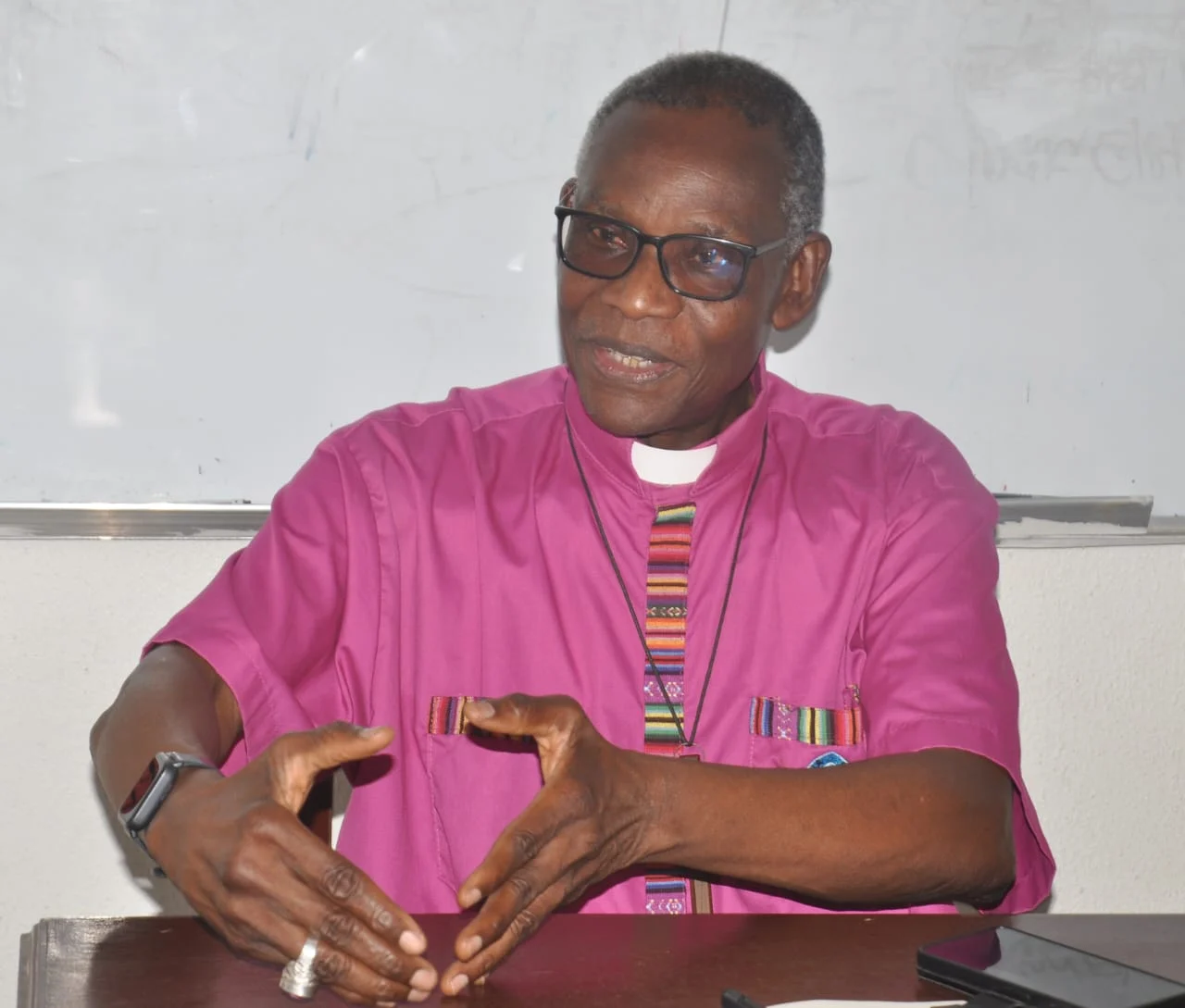

A former Secretary-General of the Anglican Communion Worldwide, Bishop Josiah Idowu-Fearon, has challenged the Federal Government to stop denying the hardship confronting Nigerians, saying millions are struggling to afford food and other basic necessities.
Idowu-Fearon, the founder and director of the Kaduna Centre for the Study of Christian-Muslim Relations, said the government should acknowledge the suffering of Nigerians and clearly explain what it was doing to address the economic crisis.
The former Chairman of the Kaduna State Peace Commission spoke in Kaduna on Monday while addressing journalists on the state of the economy, the recent meeting between President Bola Tinubu and Catholic archbishops, the 2027 elections and the role of religious leaders in politics.
His comments came amid continuing public debate over the impact of the Federal Government’s economic reforms, particularly the removal of the petrol subsidy and foreign exchange reforms introduced by the Tinubu administration.
Although the government has repeatedly defended the reforms as necessary to stabilise the economy, increase government revenue and attract investment, Nigerians have continued to complain about high food prices, transportation costs, electricity tariffs and other living expenses.
The bishop said his regular interactions with ordinary Nigerians had exposed him to the severity of the hardship, including rising food and transportation costs.
“To say people are not suffering as a result of what is going on in our country, I think we are being economical with the truth,” he said.
According to him, some Nigerians could barely afford food, while others had been forced to reduce their meals because of rising prices.
“You can see suffering. There is no doubt about that.
“A good number of people just have one meal a day. They can hardly even have a balanced meal,” Idowu-Fearon said.
He said the hardship was also affecting church attendance, as some worshippers could no longer afford motorcycles, taxis or buses to attend services.
“It’s not that the people themselves can afford to take either taxis or buses to the church. So, there is poverty,” he said.
Idowu-Fearon also questioned the impact of increased revenue accruing to the three tiers of government.
“I also heard the Minister of Finance talking about trillions coming in, trillions going to the state governors, going to the local government chairmen. And I ask, where is the money? Where is this money?” he asked.
The cleric said the rising cost of household items illustrated the severity of inflation, recalling that an item that previously cost about N500 was recently quoted at N5,000.
“Something that we were paying about 500 Naira for, 5,000! Tomatoes, anything you ask, they tell you thousand, thousand. What do we do?” he said.
He also lamented electricity supply, saying his residence had been without public power for several days.
“Since Friday, we have not had electricity. Since Friday,” he said.
The bishop urged the government to acknowledge the hardship and communicate its plans to Nigerians.
“Instead of denying, government should say, ‘We are aware. This is what we are doing, this is what we are doing,’” he said.
Idowu-Fearon warned religious leaders against becoming too close to politicians, saying dependence on political leaders could compromise their ability to speak truth to power.
“As religious leaders—whether an Imam or a priest, a Sheikh or a Bishop, whatever—when you begin to frequent politicians, you get corrupted,” he said.
He added, “If I give you money, if I make sure that you are very comfortable, you cannot challenge me. You’d rather become economical with the truth.”
On the 2027 elections, the bishop urged Nigerians to look beyond the religion of candidates and choose leaders who genuinely practise the values of their faith.
“Nigeria, honestly, this country does not need a Muslim or a Christian president. What we need is a president who is Christian or Muslim. There is a difference,” he said.
He said neither Christianity nor Islam encouraged corruption, tribalism or dishonesty.
“Neither Islam nor Christianity encourages tribalism, stealing, telling lies, exploiting people,” he said.
Commenting on Governor Uba Sani’s decision to return Kaduna to a Muslim-Christian political arrangement, Idowu-Fearon said the decision reflected the state’s political and religious realities.
“However, the political terrain in Kaduna supports what Governor Uba Sani has done. The terrain supports it,” he said.
He urged religious and traditional leaders not to dictate how their followers should vote in 2027.
“I don’t subscribe to a traditional ruler, a Bishop, or whoever telling members what to do. We should have debates. We should encourage debates!” he said.
On insecurity, the former peace commission chairman acknowledged improvements in Birnin Gwari but urged authorities not to relent.
“The government is trying, but… they should not relent. They should keep the pressure on those who are committed to creating problems.
“Birnin Gwari today, as far as I’m concerned, is a part of the state we can flag, because things have really gone down a bit,” he said.