
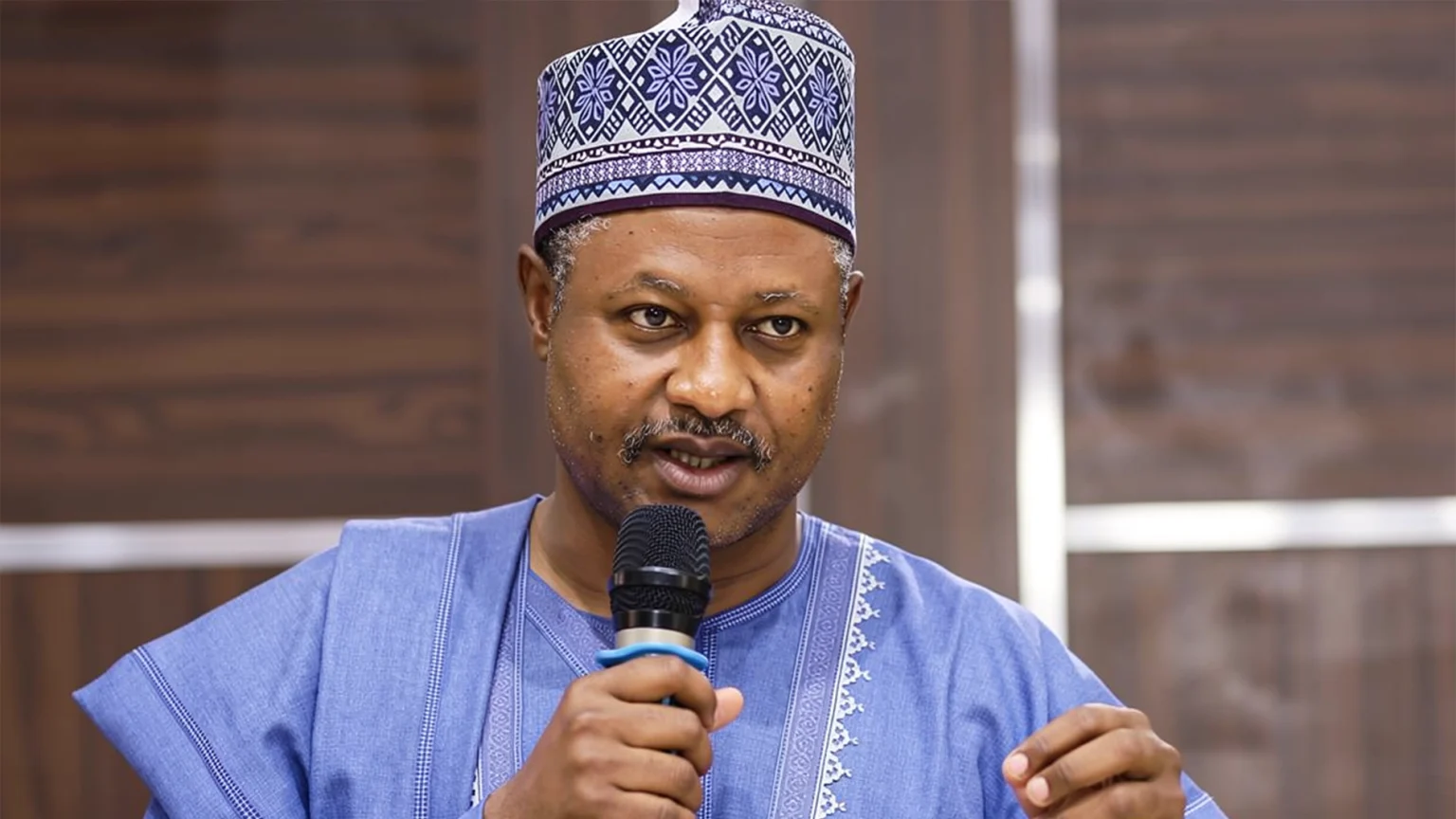

Kaduna State Governor, Uba Sani, has called on political leaders who have held public office in Northern Nigeria since 1999 to take responsibility for the region’s developmental challenges, particularly the rising number of children who are out of school.
Sani made the statement while defending President Bola Tinubu’s performance, arguing that the North’s longstanding problems should not be blamed entirely on the current administration, given that many of them existed before Tinubu assumed office.
The governor maintained that former and serving public office holders, including governors, ministers, senators and vice presidents, must accept their share of responsibility for the region’s condition.
“I’m a northerner, and I’m telling you that anybody who held position, whether a governor, minister, senator, vice president, you should be ready to take blame,” he said.
Speaking on the education crisis, Sani cited figures indicating that Nigeria had approximately 18 million out-of-school children in 2023, with about 70 per cent of them residing in Northern Nigeria.
He questioned why Tinubu, who became president in May 2023, should be held solely accountable for a problem that has persisted for several decades.
The Kaduna governor also revealed that the state had approximately 550,000 out-of-school children when he took office in 2023. He claimed that his administration had successfully returned 300,000 of those children to school.
Sani urged politicians to stop relying on regional identity to attract votes, insisting that leadership should be judged by performance and achievements rather than where a candidate comes from.
According to him, voters in Northern Nigeria are increasingly interested in the track records of political candidates and are unlikely to support anyone simply because they share the same regional background.
“The people of Northern Nigeria are very smart. You cannot come to them and tell them, ‘Vote for me because I’m a northerner.’ They will never vote for you. They can only vote for you based on your track record,” he stated.
The governor also pointed to federal road construction projects across the North-East and North-West as evidence of infrastructure development under Tinubu’s administration.
He disclosed that over 348 kilometres of roads had been completed in the North-East, while approximately 3,100 kilometres were still under construction. He added that projects covering about 1,800 kilometres were approaching 90 per cent completion.
In the North-West, Sani said more than 342 kilometres of roads had been completed, with another 1,042 kilometres of ongoing projects reportedly nearing 90 per cent completion.
On access to higher education, the governor stated that over 414,000 students from the North-West had benefited from the Nigerian Education Loan Fund (NELFUND), with approximately N84 billion allocated to the region.
He described the student loan initiative as an important intervention for young people from financially disadvantaged families who might otherwise find it difficult to fund their education.
Sani also emphasised the need to strengthen technical and vocational education and training (TVET), noting that practical skills development could help tackle unemployment and create more opportunities for young people across the North.
He concluded by stressing that education remains fundamental to Northern Nigeria’s development, urging political leaders to prioritise policies and programmes capable of improving the living conditions of the people.